
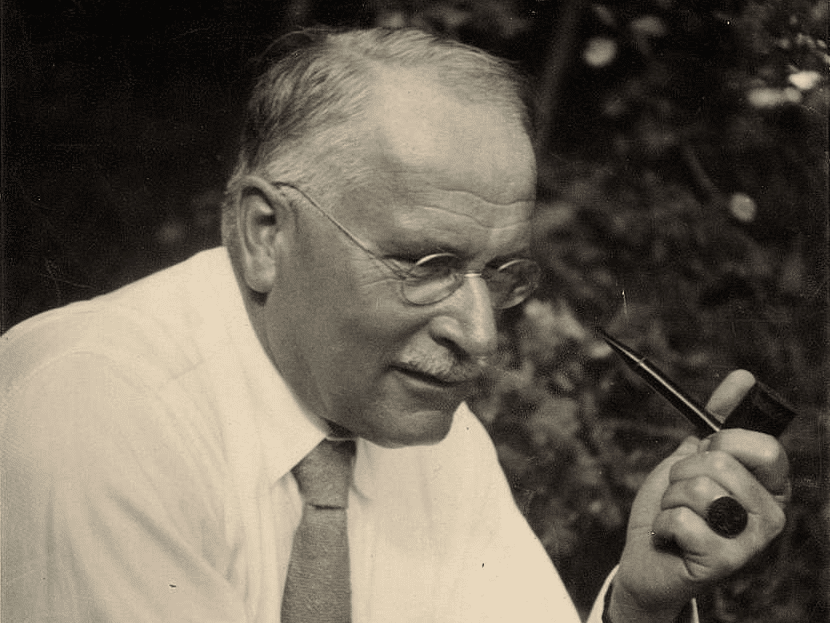
Carl Jung, Synchronicity, and Radionics: Keys to Choosing the Future You Want to Experience
Carl Gustav Jung (1875-1961) was one of the great pioneers of modern psychology. Initially a disciple of Freud, he soon departed from his teacher to forge his own path in which the mind was not limited to the biographical and repressed, but was understood as part of a much broader symbolic framework. Among his most influential contributions are the collective unconscious and archetypes, universal patterns of the psyche shared by all humanity.
However, one of his most fascinating concepts was that of synchronicity: meaningful coincidences between internal events (thoughts, emotions, dreams) and external events that bear no obvious causal relationship, but rather a meaningful connection. For Jung, these phenomena revealed the existence of an underlying causal order, where mind and world are interconnected in the same field of meaning. Jung describes all of this in interesting detail in his book “Synchronicity: A Principle of Acausal Connections” (1952).
This approach offers an extremely valuable theoretical framework for understanding radionics. Like Jungian synchronicity, radionics is based on the premise that reality is organized not only by linear causes, but also through patterns of resonance and meaning. The use of an authentic radionics device would then function as a vibratory bridge capable of connecting conscious intention with this invisible network of information.
Applied Practice of Synchronicity
In this way, radionics can be seen as an applied practice of synchronicity: instead of passively waiting for meaningful coincidences to occur, specific devices and modes of action are used to promote the emergence of situations consistent with the user’s intention (whether in relation to oneself or in relation to others). Sometimes the effect can be felt directly (a physical improvement, a sense of harmony), and other times it appears in the form of external synchronicities: unexpected encounters, opportunities, or circumstances that propel us toward the desired goal.
Jung’s great contribution was to point out that the mind and reality are not two separate worlds, but two expressions of the same whole. Radionics, by working with affirmations, goals, symbols, and vibrations, offers a practical tool for interacting with this deep level of connection, thus becoming a valuable bridge between depth psychology and the exploration of new ways of influencing our life experience.
Carl Gustav Jung, for his part, showed that the psyche and the external world can intertwine through synchronicity, revealing an invisible order where events acquire a deeper meaning.
Radionics, situated at this intersection of science, depth psychology, and vibrational practice, offers a path to orient consciousness toward the most favorable futures. These are not mere theoretical speculations, but real interactions that facilitate the emergence of conditions consistent with the individual’s intention.
In this context, radionics and synchronicity complement each other: the former as an active instrument, the latter as a manifestation of the invisible connection that underlies reality. And if the quantum multiverse is right, perhaps what we do when working with radionics is precisely this: tune into the version of reality we wish to experience, paving the way for a more harmonious, meaningful future that is closer to our purpose.

